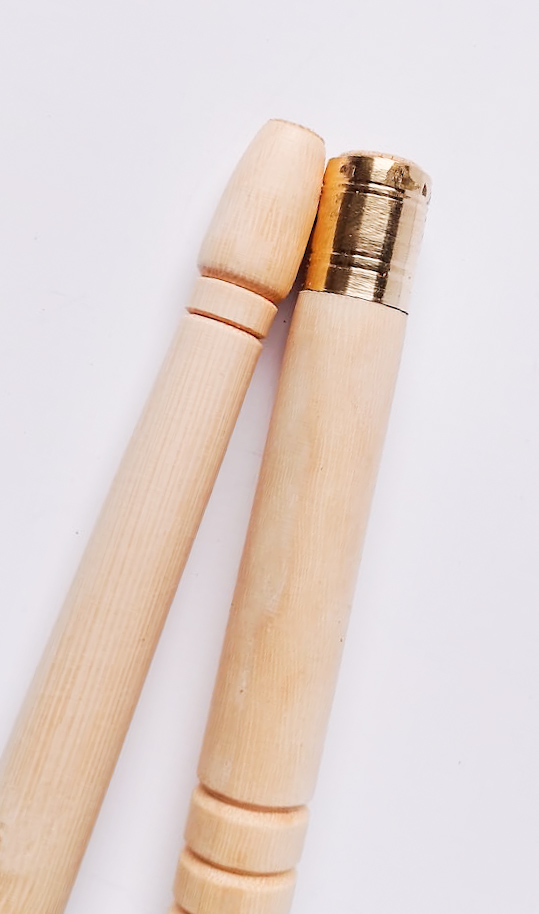
With no stain and no pattern, this piece is decided at the blank stage. Pale wood shows everything, so any blank with a knot, a shake or a colour streak is put aside before it is bored, and a good proportion never make it to the lathe at all.
The surface matters more than the shape here. After turning, the stem is worked through progressively finer abrasive and then burnished, which closes the grain and brings up a soft sheen without any coating sitting on top of it. That is why the piece feels dry rather than waxy in the hand.
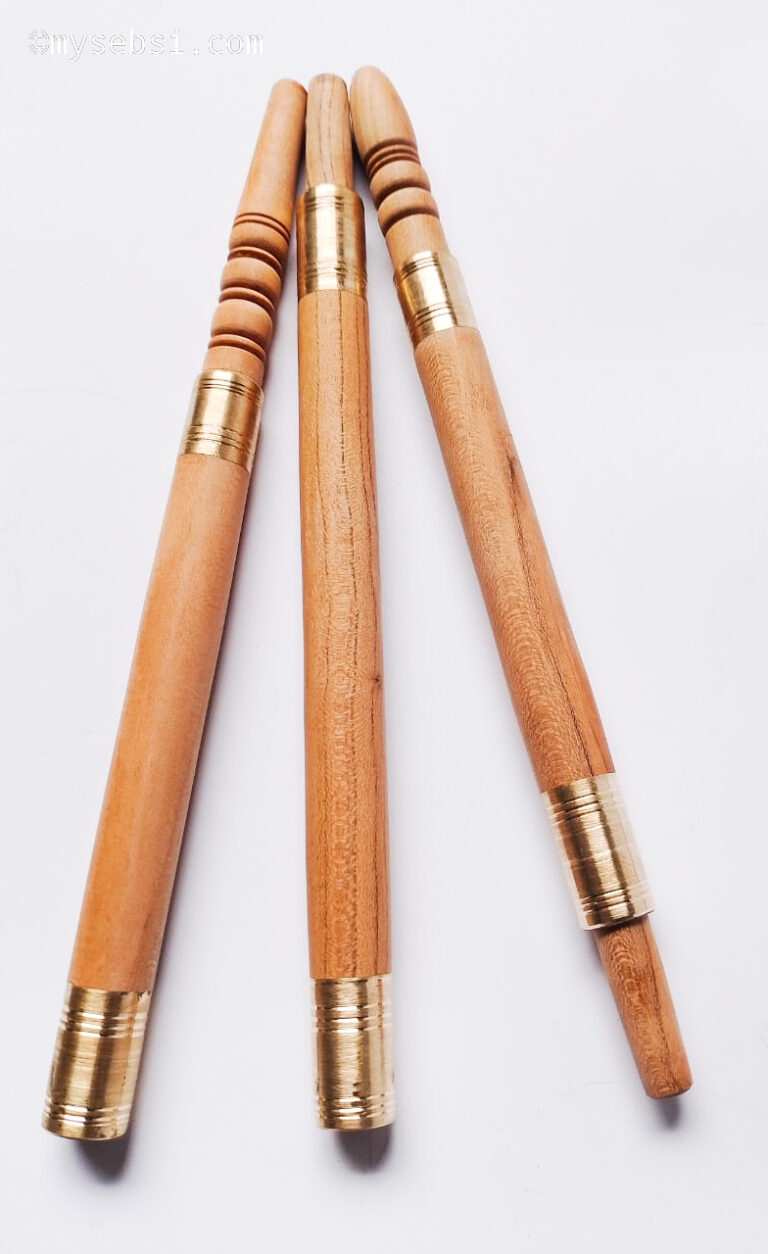
One band of brass sits at the joint and nothing else is added. The wood is left unstained, so it will warm and deepen a little over the first months of use. Retailers who sell on form rather than pattern tend to take this one first.