Oxblood Twist
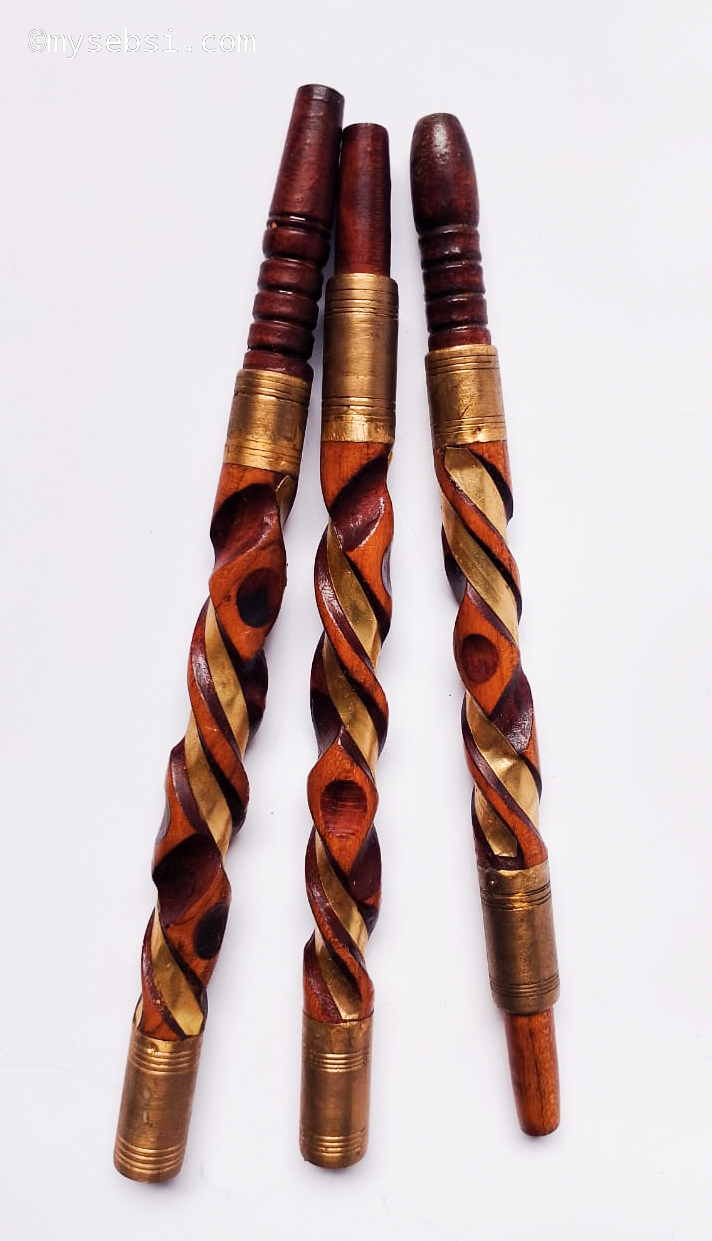
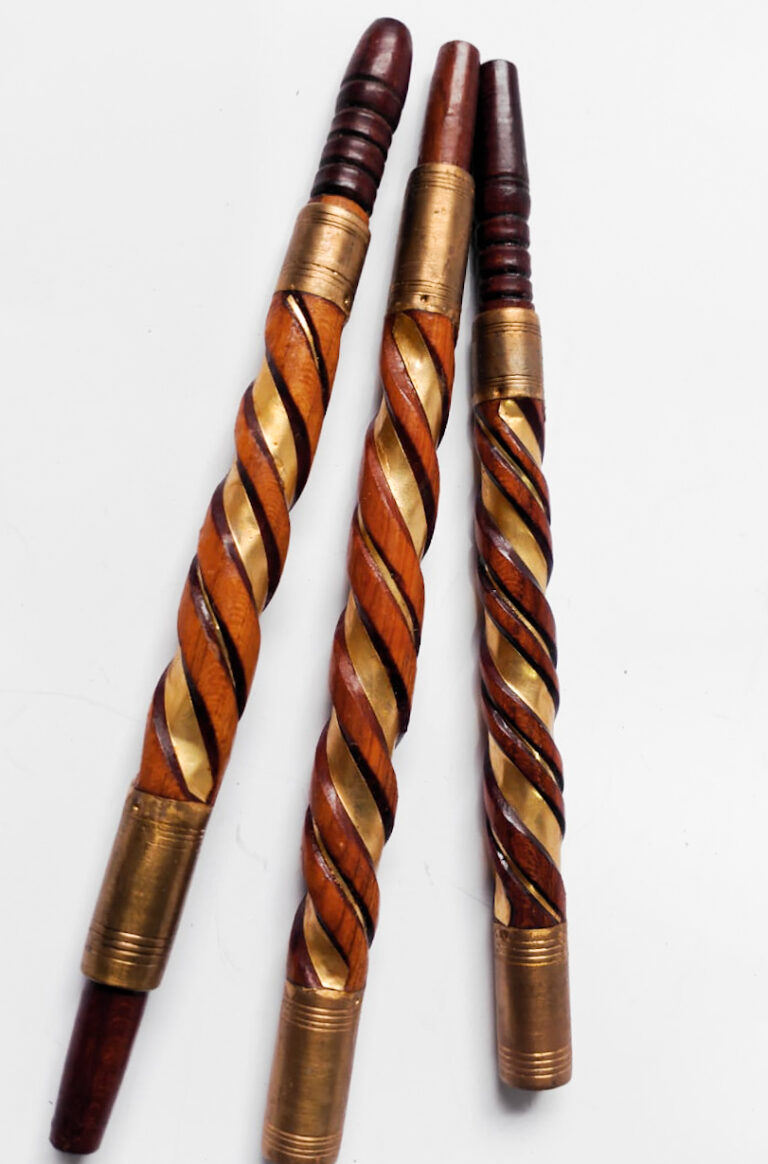
Deep red spiral running the whole length of the stem, closed with a wide hammered brass collar.
| Collection | Carved Spiral |
|---|---|
| Form | Long-stem sebsi, carved rope spiral |
| Stem | Hardwood, bored before shaping |
| Bowl | Fired clay (shqaf) |
| Metal | Hand-hammered sheet brass |
| Finish | Hand-stained deep red, oiled back |
| Total length | Confirmed on your quote |
| Minimum order | 12 units per collection |
| Bundle weight | Confirmed on your quote |
| Variation | Made by hand, so dimensions and colour differ slightly between pieces. |
You must be 21+ to inquire about or purchase smoking accessories.

How This One Is Made
The stem is bored before it is shaped. A long bit is worked down the centre of the blank while the wood still has enough bulk around it to hold the line straight. Bore a stem that has already been brought down to its taper and the bit wanders, then breaks out through the side, and the piece is finished before it started.
The spiral is cut, not turned. The carver sets the lead of the twist by eye at the thick end and then works down the stem with a knife, lifting the same weight of shaving on every pass so the rope stays even as the wood narrows underneath it. This is the slow stage and the one that decides the piece. A twist that drifts cannot be corrected, only thrown.
Colour goes on last as a stain worked in by hand and then cut back with oil, which is why the red sits darker down in the grooves than it does on the raised rope. The brass is fitted after that: a strip of sheet hammered around the joint, filed flush to the wood and burnished until it holds light. The clay bowl seats into the finished end.
More from Carved Spiral
Interested in Oxblood Twist?
Send one inquiry and we will come back with wholesale pricing, minimum order quantities and lead times.