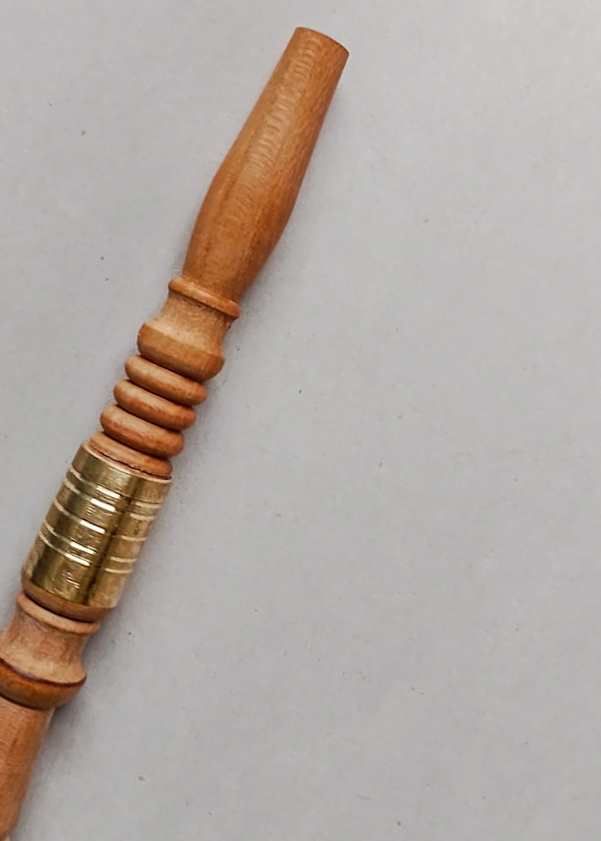
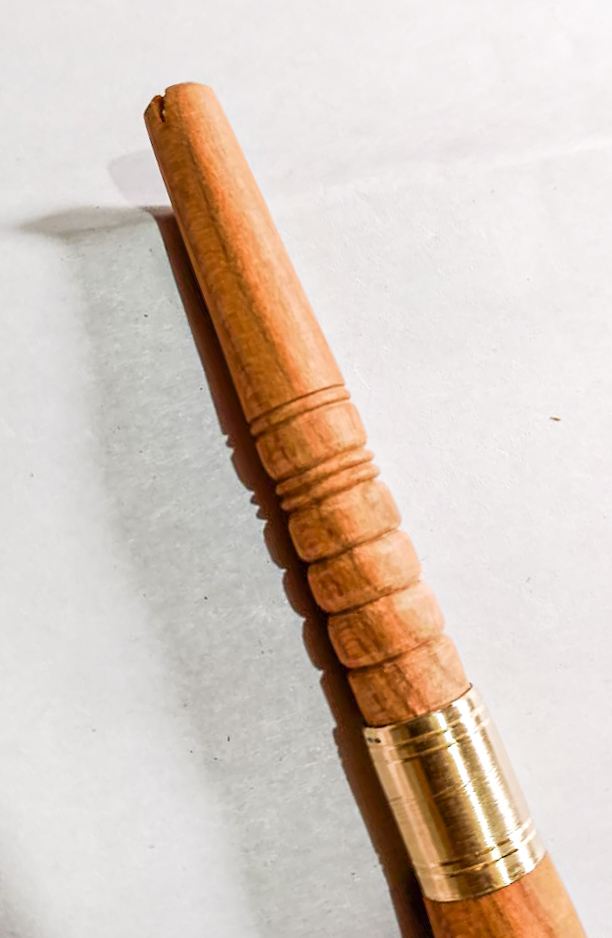
A deeper ferrule than the collar pieces, and set into a paler wood, so the contrast does more work than the weight does. The brass covers a longer run of the stem, which means it has to be drawn down over a taper rather than around a parallel section.
That taper is the whole problem. Brass wrapped around a cone wants to open at the wide end and crush at the narrow one, so it is worked from the middle outward in small passes, checking the fit constantly, and taken off and re-annealed whenever it stops moving cleanly.
The wood is left plain above and below. No turning, no banding, no stain beyond oil. Everything the piece has to say is in the one length of textured brass sitting in the middle of a clean stem.